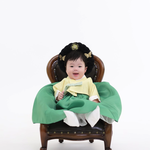
Korea has a long list of public holidays, and for a visitor most are simply days when the banks are shut. Two are different in kind. 설날 (Seollal), the lunar new year, and 추석 (Chuseok), the autumn harvest holiday, are the dates on which the country stops being a place you can move around freely and becomes several million family houses with the doors closed. Understanding them is partly cultural interest and partly logistics.
Why These Two Outrank Everything Else
Both are three-day holidays — the day before, the day itself, the day after — and that structure exists for a reason. Two travel days either side of one ceremonial day is what allows a nation of internal migrants to get to their parents' house and home again. What separates them from Christmas or the solar new year is that they carry obligations rather than only leisure: rites at a set hour, food that takes two days to prepare, and greetings given in order of age.
Chuseok is often introduced to visitors as Korean Thanksgiving. That works for the harvest and the eating and the travelling, but it misses the centre of the thing, which is the ancestors rather than gratitude in general. Its older native name, 한가위 (Hangawi), means roughly the great middle of autumn, and the holiday falls on a full moon.
The Dates Move, Every Single Year
Both follow the lunar calendar, so they drift against the solar one. Seollal is the first day of the first lunar month, landing between late January and late February. Chuseok is the fifteenth day of the eighth lunar month, which puts it in September or occasionally early October. A swing of two or three weeks is normal, and it is the difference between a country open for business and one largely shut.
There is a second wrinkle. When one of these dates falls on a weekend, or leaves a single awkward working day stranded beside it, the government commonly designates a 대체공휴일 (daechegonghyuil), a substitute holiday, which can stretch the break to five or six days. These are announced rather than fixed by rule, so check the specific year before booking anything in late January, February, September or early October.
귀성: The Whole Country Travelling at Once
귀성 (guiseong) is the word for returning to one's home town, and it happens on a scale with no real equivalent elsewhere. Most of the population attempts the same journey inside a two-day window. Expressways congest until a normally short drive takes most of a day, bus terminals run at capacity, and KTX seats for the peak days are gone within minutes of each advance booking round opening.
Three rules follow: avoid long-distance travel on the holiday itself or the day before, book the moment tickets are released, and build slack into any connection. The compensating advantage is often overlooked. Seoul empties, and what remains is a major city at a fraction of its usual density — subway carriages with seats, palace grounds that are pleasant rather than crowded. The mechanics are in the public transport guide.
차례: The Rite That Anchors the Morning
차례 (charye) is the ancestral rite performed at home on the morning of the holiday, and it is the reason for the travel. A table is laid with prepared dishes in a prescribed arrangement, rice wine is poured, and the family bows together to several generations of ancestors in order. It is short — the preparation takes two days, not the ceremony. At Chuseok many families also make 성묘 (seongmyo), a visit to the family graves, which often includes cutting back the summer's grass.
It is worth being accurate about how universal this is, because visitors are often told every Korean family does it. Many Christian families hold a memorial service instead. Many households have simplified the table, and some stopped altogether as families dispersed and as the preparation burden — traditionally falling on the women of the household — was questioned.
세배 and 세뱃돈
On the morning of Seollal, after the rites, children and younger adults perform 세배 (sebae): a deep formal bow to their elders, down to the floor, offered with the greeting 새해 복 많이 받으세요 (saehae bok mani badeuseyo), meaning roughly may you receive much fortune this year. The form differs slightly for men and women.
The elder responds with a few words of advice and then with 세뱃돈 (sebaetdon), New Year money, presented in an envelope. The amount scales with the child's age and the closeness of the relation, and for most Korean children this is the best part of the year. Sebae is done in order of seniority, one of the clearest everyday demonstrations of how age organises Korean social life.
떡국 and 송편: One Food Each
Seollal is 떡국 (tteokguk), a clear broth with thin oval slices of rice cake, usually with beef, egg and seaweed. The cakes are cut into coins and the soup is white, both read as marking a clean start. Tteokguk carries a piece of folk arithmetic: a bowl adds a year to your age. That was literal under the old counting system, in which everyone turned a year older together at the new year rather than on their birthday. Korea moved to international age reckoning in 2023, so the saying is now custom.
Chuseok belongs to 송편 (songpyeon), small half-moon rice cakes filled with sesame and honey, sweetened bean or chestnut, steamed on a bed of pine needles that leaves its scent in them. They are shaped by hand, which makes them a group activity. Both holidays also bring 전 (jeon), savoury pancakes fried in batter, along with 잡채 (japchae), braised short ribs and seasoned vegetable side dishes. The dining customs post covers how such a table is eaten.
한복 and the Games
한복 (hanbok) appears at both holidays, though less than photographs suggest. Small children are frequently dressed in it for the rites and the family pictures; adults, especially men, increasingly are not. What has grown instead is rental hanbok worn around the Seoul palaces, where visitors in hanbok are admitted free — a good deal on a holiday when the grounds are quiet.
The games exist because these gatherings put three or four generations in one room for a whole day. 윷놀이 (yunnori) is the central one: four flat wooden sticks are thrown, the combination of flat and rounded faces determines the move, and markers travel a board. It needs no strength and no reading, so a grandmother and a five-year-old play on equal terms. Others survive more as public events — 제기차기 (jegichagi), 널뛰기 (neolttwigi) and the circle dance 강강술래 (ganggangsullae).
What Closes, What Stays Open
The pattern is more predictable than it first appears:
- Closed: banks, government offices and post offices for all three days; most small independent restaurants and neighbourhood shops on the holiday itself.
- Briefly closed: department stores, typically for the holiday day, reopening either side.
- Open as normal: convenience stores, the subway and city buses, chain cafes, cinemas, large malls in central districts, and airports.
- Often free: the major palaces and several national museums, which routinely waive admission.
The failure mode to plan around is dinner. In a residential neighbourhood on the holiday evening, the small family-run places you were relying on will be dark, because the family is upstairs eating with its own relatives. Central districts are the fallback, and a 24-hour jjimjilbang is open when almost nothing else is. Chuseok weather is usually the best of the year, and the four seasons post sets out what to expect either side of it.
If You Are Invited
An invitation to spend one of these days with a Korean family is a real one, not a formality, and accepting is the right answer. Bring a gift, and bring the conventional kind rather than something imaginative: boxed fruit, Korean pear in particular, dried seaweed, or good tea. Hand it over with both hands.
Then follow rather than lead. Shoes off at the door, greet the oldest person present first, wait to be shown where to sit, and let someone else start eating. If charye is happening you may be asked to stand at the back and observe, which is normal and not exclusion. Expect direct questions about age, marital status and work, which would be intrusive elsewhere and are here how a family locates you in relation to itself.