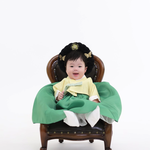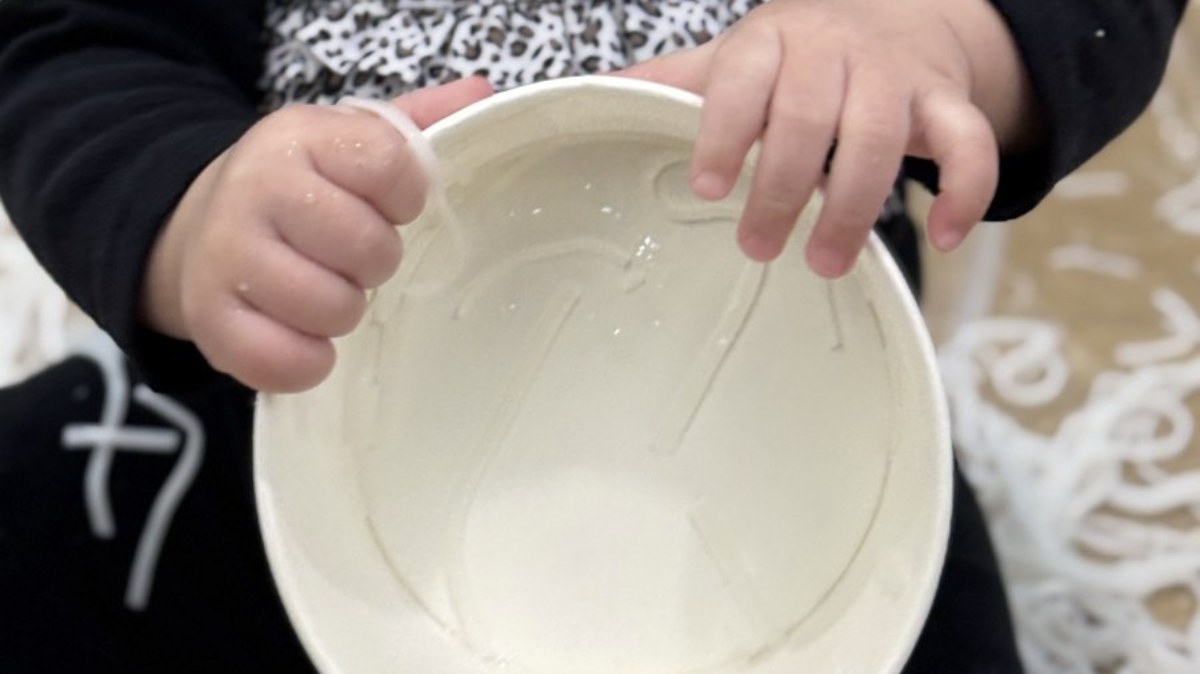
Our first regular baby class gave us exactly what I had hoped for: funny photographs, a happily busy baby and one parent learning not to lead every activity.
Field note: this English article is adapted from the Korean review I published on 21 February 2025. We paid for the class ourselves. The specific instructor, timetable and course availability may have changed; the current Hyundai Culture Center pages linked below are the place to check before booking.
At around six months, INa began what I jokingly called her first social life: a weekly baby class at the culture centre inside Hyundai Department Store Pangyo. In Korean parenting conversations, this kind of place is usually shortened to 문센 (munsen), from 문화센터 (munhwa senteo, culture centre).
It sounds formal in English. In practice, ours was a padded room full of babies, parents, costumes, music, sensory materials and one instructor trying to hold the attention of people whose concentration could disappear in seconds.
What a Department-Store Culture Centre Is
Major Korean department stores operate education programmes above the shopping floors. The catalogue is not only for babies: it can include exercise, art, cooking, music and one-day workshops for many ages. For a new parent, however, the baby classes are the part that suddenly becomes visible. They provide a regular place to leave the house, meet families at a similar stage and learn simple ways to play at home.
Hyundai's current rules describe its regular courses as weekly classes over a three-month term, usually 11 or 12 meetings. Terms begin in March, June, September and December, with registration opening around the end of January, April, July and October. Those are programme rules, not a guarantee that one named class will return each term.
The Pangyo culture centre is on the ninth floor of the department store. That location shaped the experience more than I expected. There were lifts, toilets, food and a baby lounge in the same building, so the outing did not depend on everything going perfectly. At six months, that kind of infrastructure is part of the class.
Why We Chose This Class
We joined “Growing Island,” a class advertised for babies aged six to eight months. A friend's older child had taken it and recommended it. Pangyo also sat roughly in the middle of where our small group of friends lived, so several babies could attend together.
That social arrangement mattered. I was not choosing an educational outcome for a six-month-old. I wanted a reason to go somewhere every week, a room designed for her age, and other parents who understood that a feed or a nap might rearrange the whole morning.
The Instructor Mattered More Than the Props
This was my first culture-centre term, so I initially compared classes by age band, location and the photographs other parents posted. Only after attending did I understand how much the instructor changes the room.
A six-month-old cannot follow a long explanation or complete a craft on command. The instructor has to keep changing pace, notice when the babies are losing interest and help the adults understand what the activity is for. Our teacher greeted the babies by name, made eye contact one by one and moved around the circle instead of performing only from the front.
Most useful to me, she explained how to repeat a movement or sensory game at home and why it suited that stage. The class therefore gave me something after the costume came off: another way to play with INa during an ordinary afternoon.
That became my first test for any future baby class. A polished set is easy to photograph. An instructor who observes the children, adjusts the activity and gives the parent a usable idea is much harder to replace.
What One Sensory Session Looked Like
The sessions changed theme, but the pattern was familiar: a greeting, music or movement, the main sensory activity, a costume or prop, and time for photographs. The exact order varied according to how the room was responding.
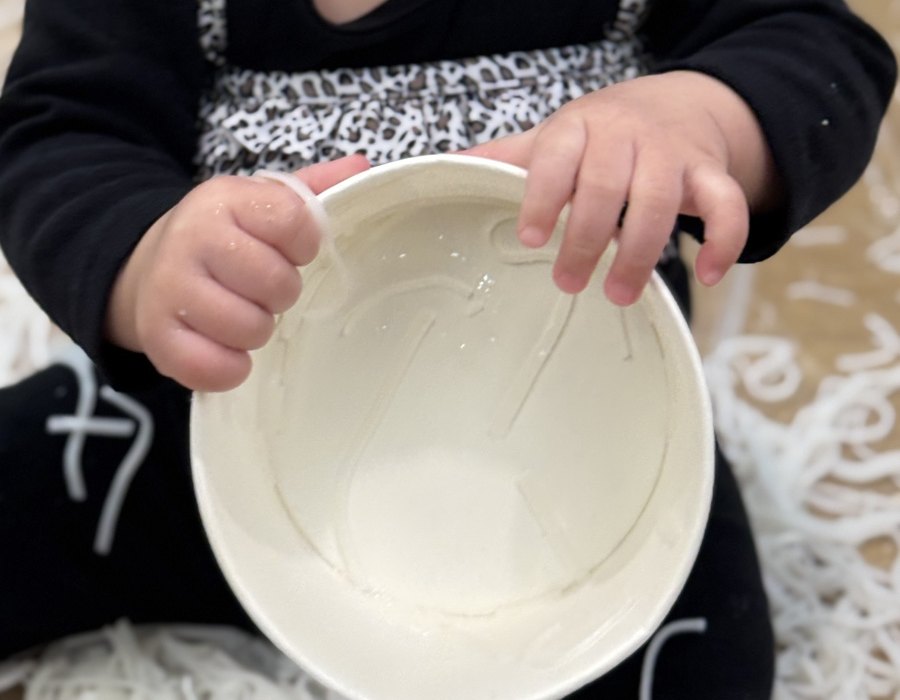
In one class, noodle-like strands became the sensory material. They were spread around the play area for the babies to touch, grab and move. Pieces stuck to INa's cheeks, and she laughed while holding a bowl. It was messy, easy to understand and appropriate for a child who explored primarily with her hands.
This is also why clothes and expectations matter. A baby sensory class is not the day for an outfit that must stay spotless. Bring whatever the course notice requests, a change of clothes when the material looks messy, and enough time after class that cleanup does not become a crisis.
How Registration Actually Works
At Hyundai, online booking requires an H.Point integrated membership with identity verification. For a child under 14, the parent registers the child as a family member and selects the actual attendee during booking. The official guide warns that some social-login memberships have restrictions on online payment, so it is worth setting up the account before registration opens.
Courses are first come, first served, and a full course can take a waiting list. The class we wanted was popular enough that I treated the opening time as an appointment and applied immediately. That is not necessary for every class, but discovering the account or child profile problem after the booking window opens is avoidable.
Cancellation rules depend on timing and sometimes on the materials a class must prepare. Read the course plan rather than assuming every one-day class or regular term has the same deadline.
What I Would Check Before Booking Another Term
- The age band on the first day, not today. A three-month term covers a large part of a baby's development.
- The instructor's interaction. I would look for attention to individual children and explanations for parents, not only elaborate props.
- The real travel time. A class placed across a nap or feed can become stressful even when the lesson itself is excellent.
- The building around the room. Lifts, a nursing space, food and a place to wait made the Pangyo location workable.
- The sensory materials. Check what to wear, what to bring and how cleanup works.
- The photo policy. Ask before photographing other children. For this English adaptation I used only images centred on our own child rather than republishing the group photographs.
- The cancellation deadline. Read the current course notice before paying, especially where materials are prepared in advance.
Why We Did Not Continue the Next Term
Our decision to stop was not a negative review. INa was due to start daycare, so the next term no longer fit the family's week. That is another useful distinction: a good class can still be the wrong commitment for the next stage.
I remain glad this was her first regular outing. The visible result was a folder of funny photographs. The less visible result was more important: I learned how differently a baby responds when another adult leads the room, how much a teacher's warmth matters, and how a small recurring appointment can give shape to the long weeks of early parenthood.
Sources checked
Last reviewed August 29, 2026.
- Original Korean review – Growing Island class — JellyGGumi Naver Blog
- Pangyo Store Culture Center Information — Hyundai Department Store
- Culture Center Online Registration Guide — Hyundai Department Store
- Course Terms, Schedule and Cancellation Guide — Hyundai Department Store
Schedules, prices and operating rules can change. Where a detail is time-sensitive, the linked operator remains the final authority.