
A Korean university prospectus can list a department with three unusual features at once: a company helps pay for it, the company can help choose its students, and the company has agreed, under conditions, to hire them. It is not an ordinary scholarship, and it is not an internship. In Korean it is a 계약학과 (gyeyak hakgwa), literally a contract department, and it runs on a public rulebook written in Korean.
Three semiconductor examples appear further down this page. The machinery underneath is general, though, and it answers the questions a student or parent actually has. Whose seat is this? Who pays? What exactly is promised? And what happens if the company walks away?
Three kinds of contract, one ministry
The legal basis is Article 8 of the Act on the Promotion of Industrial Education and Industry-Academic Cooperation, which lets a school set up a course or department under contract with the state, a local government or a business in three situations.
- Hiring-conditional. The sponsor signs a tuition-support contract on the condition of hiring, and asks for a special curriculum.
- Retraining. The sponsor sends its own employees for retraining, upskilling or a change of job, and pays all or part of the cost.
- Co-designed. The sponsor and the school jointly set selection standards, develop the curriculum and teaching materials, and bring industry staff into the teaching.
Whichever kind it is, the head of the school has to report the plan to the Minister of Education, and a closure has to be reported too. The enforcement decree sets the deadline at two weeks before the contract is signed, and two weeks before a planned closure. A school or a sponsor that breaks the rules can be barred from opening new contract departments for a period the minister sets, of up to three years.
Seats that sit outside the usual count
This is the detail most worth slowing down for. Under the enforcement decree, contract-department seats are treated as a separate quota rather than being carved out of the school's regular admission numbers.
There is a ceiling, and it is the first number worth remembering. For a hiring-conditional department, the intake in any year may not exceed 20% of that year's total entering class, rising to 50% when the department is in an advanced-industry field the ministry designates, such as artificial intelligence or big data.
Since a 28 March 2023 amendment, a university can also skip founding a new department and, for a hiring-conditional contract, run part of an existing department's intake as contract seats, again capped at 20% of that department's entering class. So a contract place may not even look like a separate department on a campus map.
Who pays for the seat
The second number is about money, and the split is set by rule. The sponsor's contribution must be at least 50% of the department's operating costs. The ministry's notice defines those costs broadly, from curriculum development and teaching materials to faculty pay, lab equipment, space and administrative support.
One exception runs the other way: a university outside the Seoul capital region that runs a hiring-conditional department in a designated advanced field may take less than half from the sponsor, but in that case the students' own fees may not exceed 50% of operating costs.
The sponsor has to qualify, too. The ministry's notice requires a business sponsor to have at least five regular employees, unless public bodies cover at least half the operating costs, and it bars any company that violated labour laws such as the Labour Standards Act, the Minimum Wage Act or the Employment Security Act in the three years before the department's founding year.
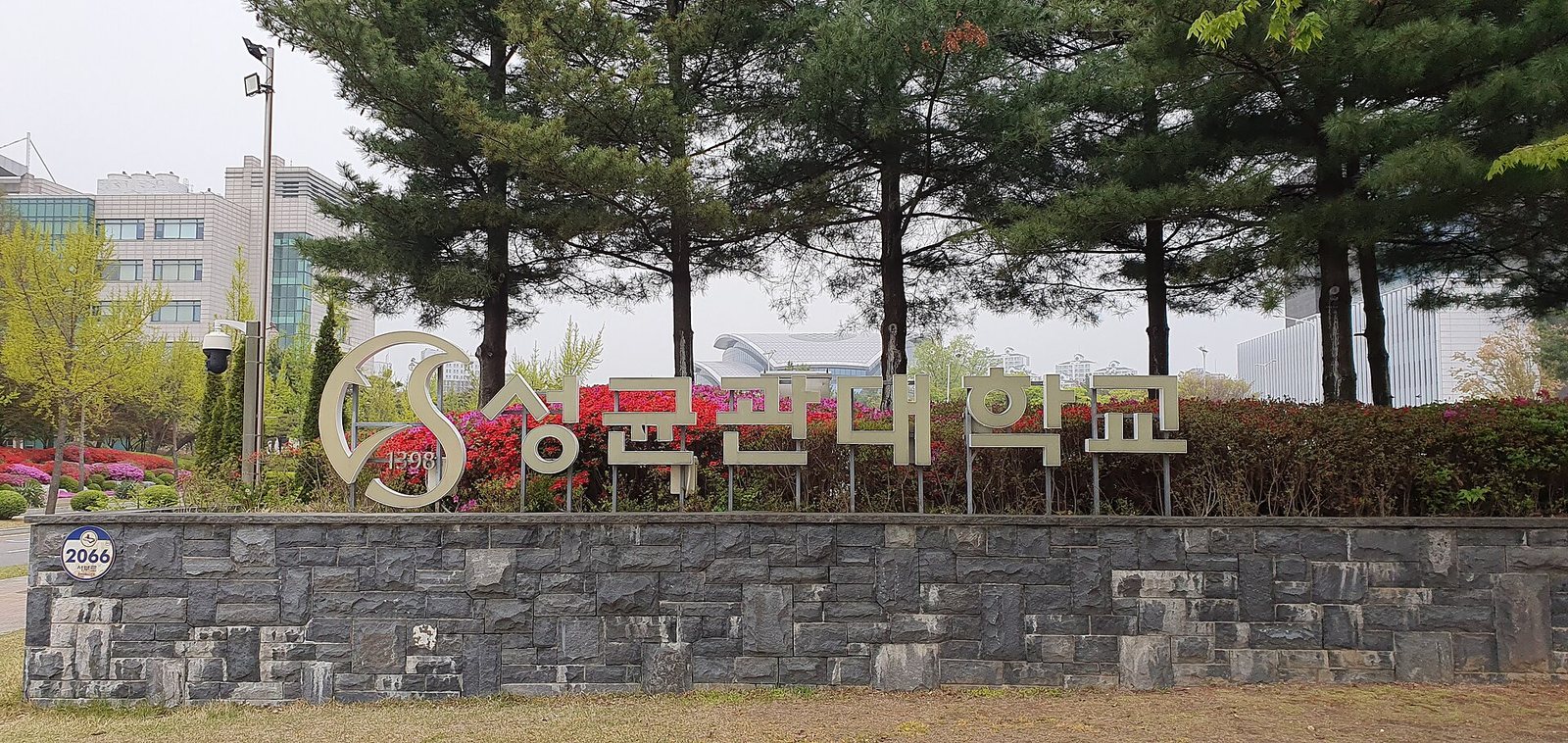
At Sungkyunkwan University, the department of semiconductor systems engineering was set up jointly with Samsung Electronics in 2006. The department says its curriculum is set by an operating committee of Samsung executives and the department's full-time faculty.
What a hiring promise looks like on paper
Here is the part that is easy to miss if a contract department is read as a job offer with a lecture timetable attached. In the national texts, the job is a condition inside each contract rather than a stand-alone guarantee. The ministry's notice requires the operating contract for a hiring-conditional department to cover how the employment rate into the sponsoring company will be managed after graduation. The notice even includes a clause for a student on a hybrid track who completes the hiring-conditional course but is not hired by the sponsoring company.
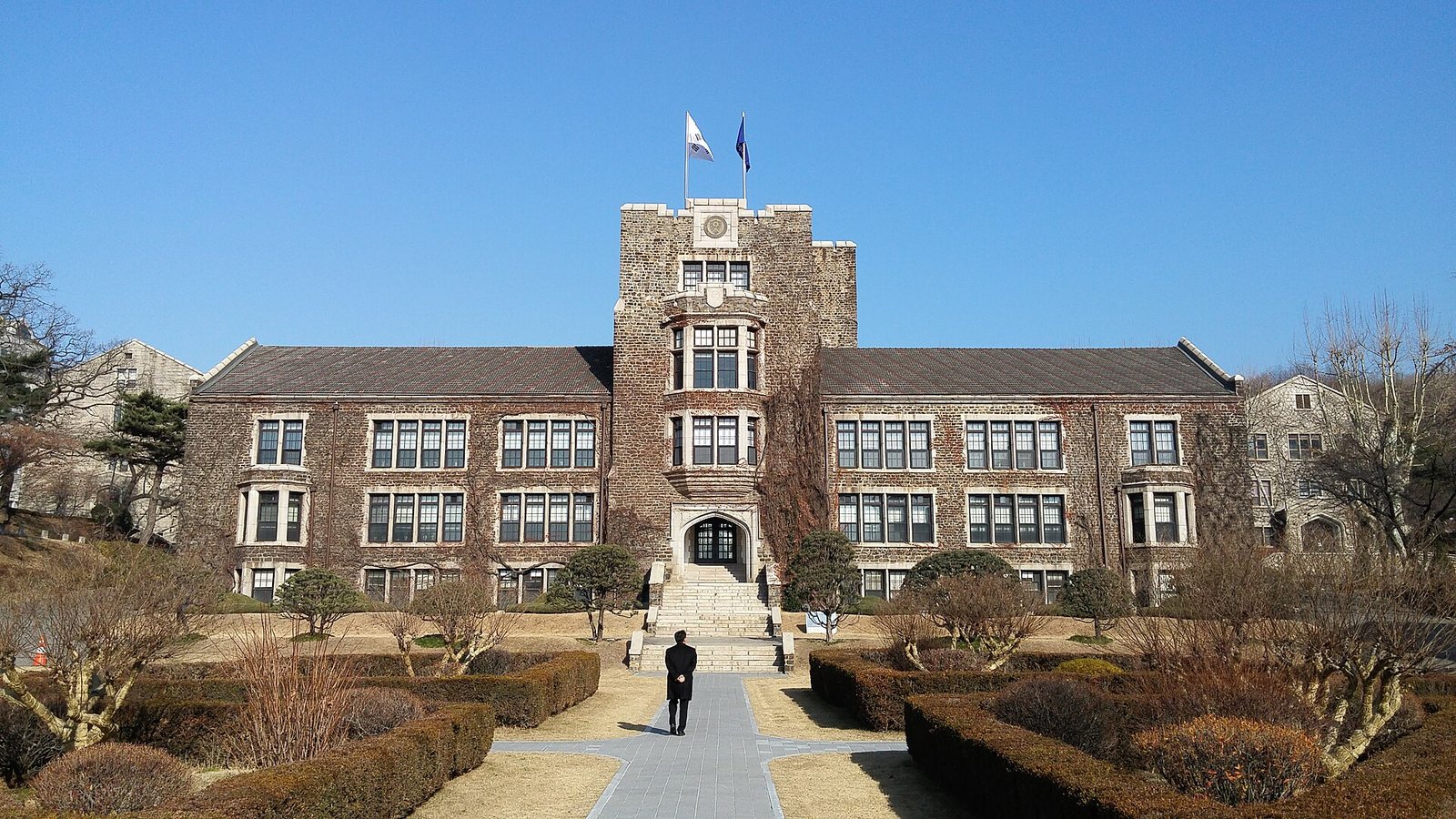
Yonsei University's graduate department of system semiconductor engineering, which describes itself as Korea's first Samsung Electronics graduate contract department, shows what the conditions look like in practice. It admits 30 master's and 10 doctoral students a year, Samsung covers admission fees and tuition, and the department says a job at Samsung Electronics after graduation is guaranteed once all of Samsung's conditions, such as grades, are met. Final admission requires passing both Samsung's track, which the department lists as the GSAT aptitude test and interviews, and Yonsei's own document review and oral examination.
The sponsor's hand in admissions is written into the national notice as well: for a hiring-conditional department the company may propose selection criteria by contract, and if it wishes, the school must guarantee its staff a place in the interviews.
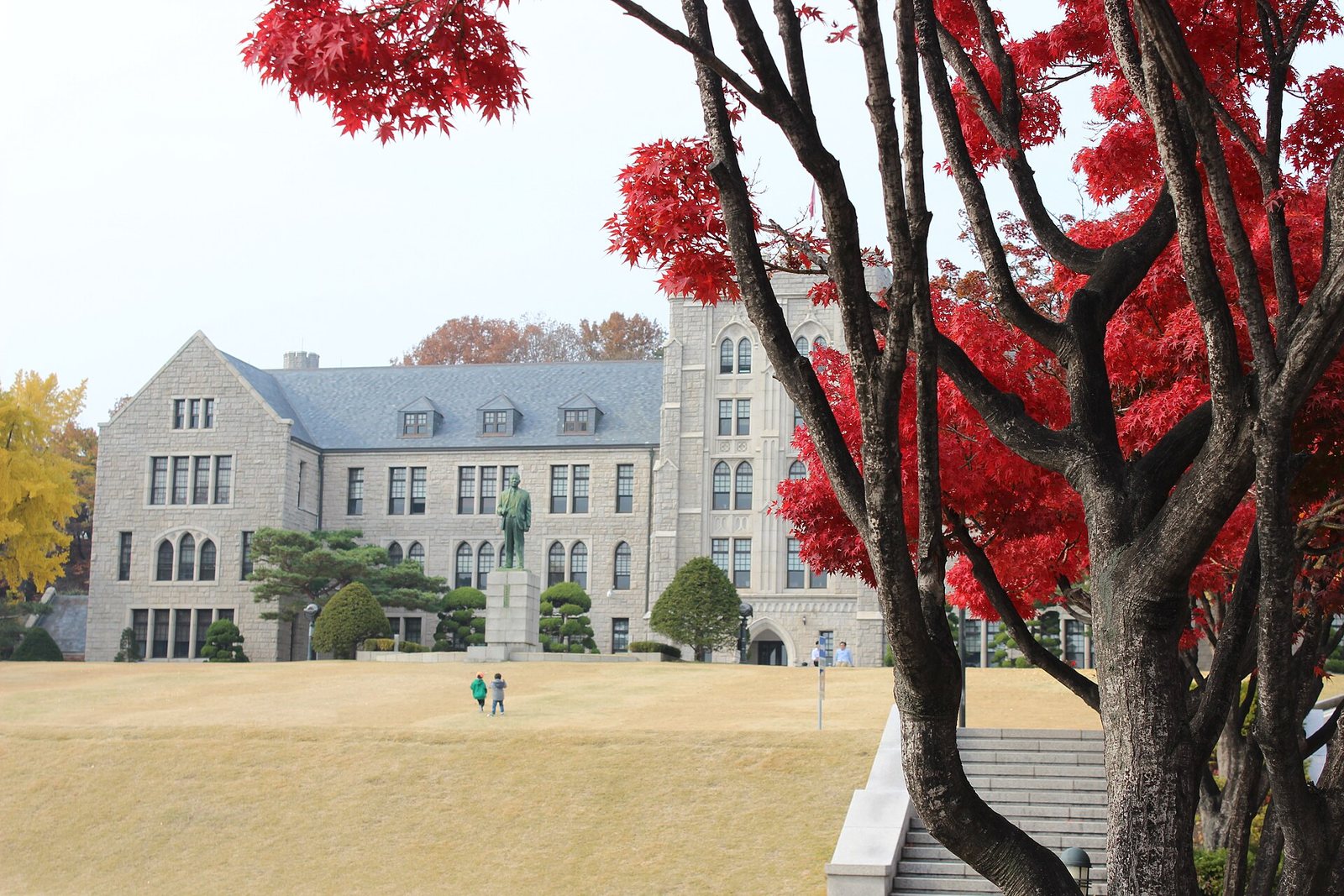
On the SK hynix side, a May 2020 article reposted on the publicity board of Korea University's department of semiconductor engineering describes it as a hiring-conditional contract department agreed with SK hynix, due to take its first students for the 2021 academic year.
The guardrails for students
The ministry's notice is unusually concrete about what happens when a deal frays.
- A contract department must run at least as long as the minimum time its students need to earn the degree.
- If a department is closed before its contract term ends, current students finish in the parent department and still graduate under the contract department's name, but unless their employer or hiring company agrees to cover at least half the costs, they must pay the full cost of their own remaining education.
- If the sponsoring company goes bankrupt or is merged so that the contract cannot be kept before a student joins it, the student can stay on only by paying the costs, and only with at least half the required credits already earned or a new agreement, within six months, with a company in the same industry or the same line of work.
- At least half of the graduation credits must come from in-person classes (distance universities have a lower floor), and the school's full-time faculty must teach at least 30% of the department's curriculum each year.
One editorial reading, offered as inference rather than as a rule: read together, the rules protect a student's degree more firmly than a student's job. That is worth knowing before an admission letter and a future offer letter start to feel like the same document.
Reading a contract department listing
Hiring-conditional departments select students through the general or special admission tracks, and when one department works with several sponsors, applicants can be split into separate recruitment units by sponsor, except in the regular jeongsi round. For how those rounds work, from the September susi round to the acceptance lock, see the guide to why Korea fills most university seats before its famous exam.
A few questions turn a glossy listing into something checkable:
- Which of the three kinds is it? Retraining departments select employees recommended by the sponsoring company, and a bachelor's or associate-degree place normally requires at least ten months of work at a company after high school.
- What does the department's own page say about the hiring condition? The Yonsei wording above, with its conditions such as grades, is a useful model of the detail to look for.
- What do the school's own regulations say? Each school's regulations must set out the department's costs and how they are shared, the students' fees, and how students are protected if the department closes before its term ends.
- How current are the rules? The texts used here are the enforcement decree in force from 24 March 2026 and Ministry of Education notice 2025-40, issued and in force from 24 December 2025.
None of this makes a contract department a bad bet or a sure thing. It makes it a contract, with a public rulebook on one side and a private agreement on the other, and the useful habit is to read both.
This guide explains the national framework as published on the Korean Law Information Center and the three department pages as they read in early October 2026. Individual contracts, tuition shares and hiring conditions vary by school and sponsor, the department descriptions quoted here come from the universities' own sites, one of them a reposted 2020 article, and nothing here is admissions or career advice.
Editorial method: AI assisted the research and drafting of this guide inside an evidence-gated editorial pipeline; every rule and number is bound to the Korean statute, enforcement decree or Ministry of Education notice published on the Korean Law Information Center, or to a university department's own page, the photographs are credited Wikimedia Commons works under open licences, and the cover image is an AI-generated editorial still life.
Sources checked
Last reviewed October 5, 2026.
- 산업교육진흥 및 산학연협력촉진에 관한 법률 제8조 (계약에 의한 직업교육훈련과정 등의 설치ㆍ운영) — 국가법령정보센터 (Korean Law Information Center) · 교육부
- 산업교육진흥 및 산학연협력촉진에 관한 법률 시행령 제8조~제9조의2 (시행 2026-03-24) — 국가법령정보센터 (Korean Law Information Center) · 교육부
- 계약학과 설치·운영 규정 (교육부 고시 제2025-40호, 2025-12-24) — 국가법령정보센터 (Korean Law Information Center) · 교육부
- 반도체시스템공학과 입학안내 — 성균관대학교 (Sungkyunkwan University)
- 시스템반도체공학과 대학원 소개 — 연세대학교 (Yonsei University)
- 반도체공학과 홍보자료 (2020-05-14) — 고려대학교 반도체공학과 (Korea University) — reposted 머니코드 콘텐츠팀 article
Schedules, prices and operating rules can change. Where a detail is time-sensitive, the linked operator remains the final authority.