
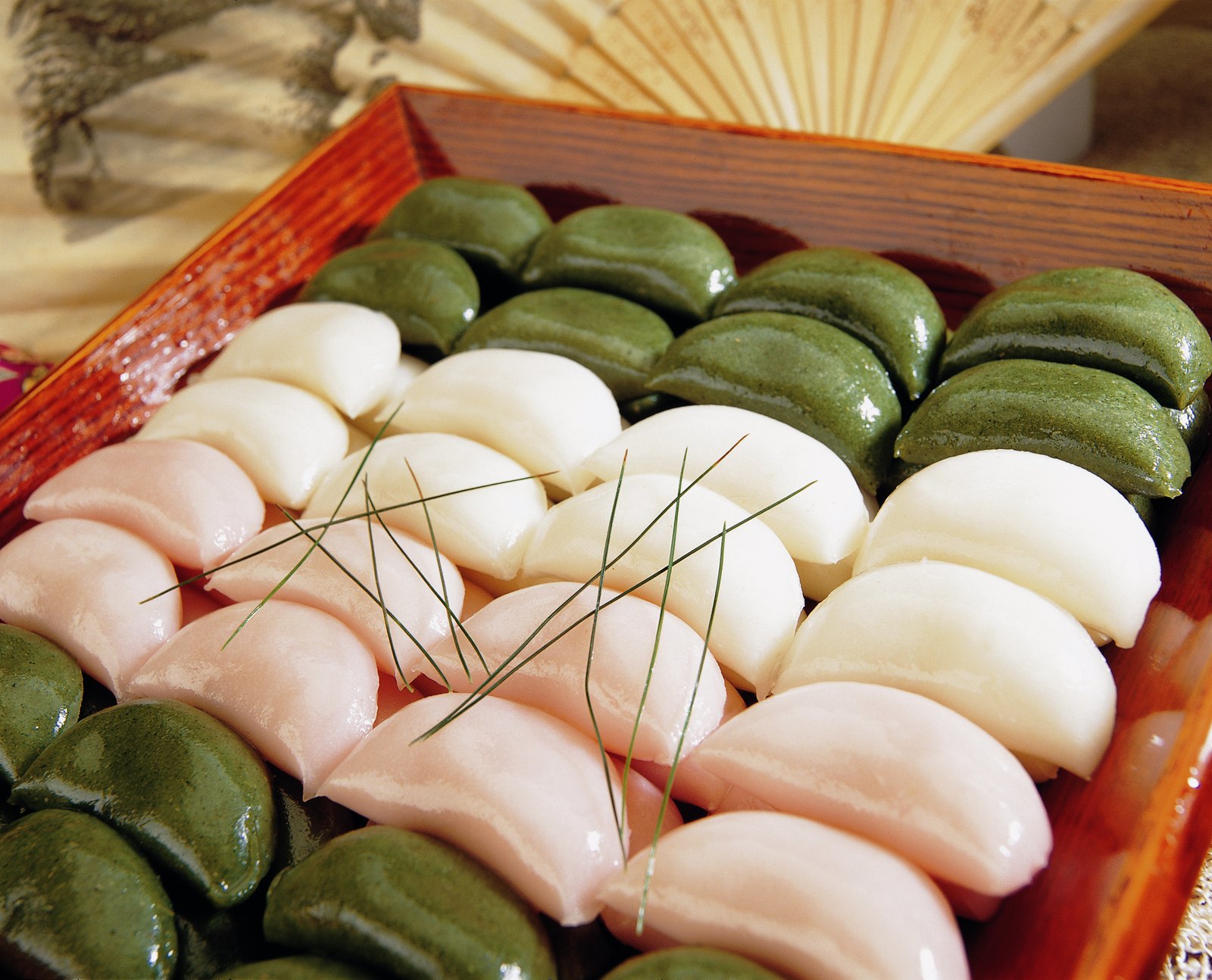
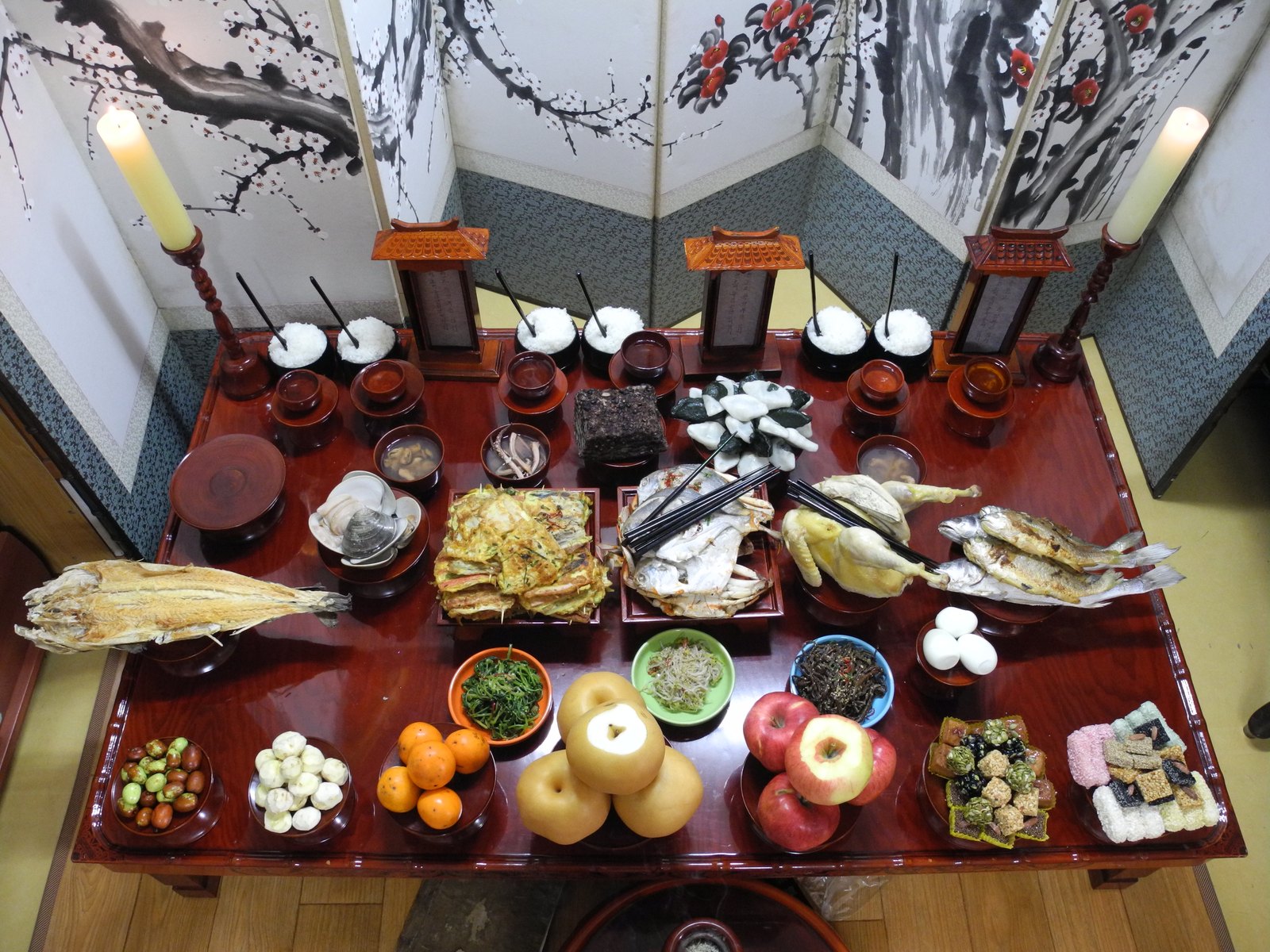
The songpyeon starts appearing in shop windows about two weeks out, which in 2026 means right about now. Chuseok falls on Friday 25 September, and the holiday block runs Thursday, Friday, Saturday.
Look at that Saturday and a reasonable assumption forms: Korea gives a substitute holiday when a public holiday collides with a weekend, so Monday 28 September should be off too. It is not. Monday is a normal working day, and the reason is one clause of one decree that treats Chuseok differently from almost every other holiday in the year.
The three days, and where they come from
Two separate authorities have to agree before a Chuseok date exists at all.
The first decides when. Chuseok is the fifteenth day of the eighth lunar month, so its position in the solar calendar moves every year. The annual 월력요항 (wollyeok yohang), the calendar-production standard announced each year by the Korea AeroSpace Administration under the Astronomy Act, fixes it: Chuseok 2026 is 25 September, a Friday.
The second decides how many days off. The Presidential Decree on public-office holidays lists the day before Chuseok, Chuseok itself and the day after — lunar 8/14, 8/15 and 8/16 — as three separate public holidays. Applied to 2026 that is Thursday 24, Friday 25 and Saturday 26 September. Add Sunday 27, which is a public holiday in its own right under the same decree, and the run of red days is four long.
The clause that skips Saturday
Here is the inconvenient part, and it is inconvenient by design rather than by accident.
Article 3 of the decree lists the situations that produce a 대체공휴일 (daeche gonghyuil), a substitute holiday. The first item covers national days, Buddha's Birthday, Labour Day, Children's Day and Christmas, and it triggers when the holiday falls on a Saturday or a Sunday. The second item covers the Seollal block and the Chuseok block, and it triggers only when the holiday falls on a Sunday.
Saturday is simply absent from the clause that governs the two multi-day lunar holidays. A third item adds a substitute when two public holidays collide on a weekday, which none of the three Chuseok days does in 2026.
So the Saturday that closes Chuseok 2026 buys nothing back, and Monday 28 September stays a working day.
Two Saturdays, one week apart, treated differently
The clearest way to see the asymmetry is to look one week further down the same calendar.
National Foundation Day, 개천절 (Gaecheonjeol), falls on Saturday 3 October 2026. It is a national day, which puts it in the first item of Article 3 — the one that does count Saturdays. It therefore earns a substitute, and because the first free day after it is a Sunday that is itself a holiday, the substitute lands on Monday 5 October. The calendar standard lists that break as three days, 3 to 5 October, explicitly including the substitute.
Two Saturdays, one week apart. One produces a Monday off and one does not. Nothing about the days themselves explains the difference; the difference is entirely which numbered item of Article 3 the holiday belongs to.
It is worth being precise about why this is a policy choice and not a legal necessity. The parent statute, the Act on Public Holidays, says a substitute may be designated when a public holiday overlaps a Saturday, a Sunday or another public holiday, and then delegates the details to Presidential Decree. The Act permits a Saturday substitute for Chuseok. The decree declines to grant one.
Korea added two holidays in 2026, and the printed calendars missed them
2026 was an unusually busy year for the holiday statute. The Act on Public Holidays was amended twice: one amendment promulgated on 10 February and effective 11 May, another promulgated on 9 April and effective 1 May. The government legislation record states the purpose plainly — add Constitution Day and Labour Day to the public-office holiday list. The implementing decree followed on 30 April.
That matters for anyone reading a 2026 wall calendar, because the official calendar standard was published on 30 June 2025, months before either amendment. It counts 70 public holidays for 2026, two more than 2025, and 118 days off for a five-day-week workplace, one fewer than 2025 — because four holidays fall on Saturdays that year: Memorial Day on 6 June, Liberation Day on 15 August, the last day of the Chuseok block on 26 September, and National Foundation Day on 3 October.
Those published totals are now out of date, and this guide does not replace them with new ones. The honest statement is narrower: the standard was written before Constitution Day and Labour Day were added, so a 2026 calendar printed from it will be missing holidays that the law has since created. Any total that matters for a contract or a payroll run should be recalculated against the current decree, not copied from a calendar.
Whether a private workplace has to give the days
Everything above describes public offices. A private employer is bound by a different chain, and it has a threshold in it.
The Labor Standards Act requires an employer to guarantee, as paid holidays, the days prescribed by Presidential Decree. The Enforcement Decree then defines those days as exactly the public-office holidays other than Sunday, plus the substitute holidays. That is the bridge: a government calendar becomes a private-sector paid holiday by reference.
Two limits are worth knowing before assuming the block is guaranteed.
The first is size. The Labor Standards Act applies to workplaces with five or more regular employees. A workplace with four or fewer sits outside it, and the paid-public-holiday duty was in any case phased in by headcount, reaching workplaces of 5 to 29 employees only on 1 January 2022. The second is substitution: the same clause allows an employer to swap a public holiday for a specific working day, but only through a written agreement with the employee representative, not a manager's decision.
There is also one route by which a missing day can still appear. The decree lets the government designate a temporary public holiday, but only after a Cabinet meeting resolution — so it is a deliberate political act, not something the calendar does on its own.
How to check any Korean holiday for yourself
The method generalises, and it is three questions in order.
First, what does the calendar standard say the date is? Lunar holidays move, and the annual standard is where the solar date is fixed. Second, which item of Article 3 does the holiday belong to? Seollal and Chuseok are in the Sunday-only item; nearly everything else is in the Saturday-or-Sunday item. Third, does the workplace fall inside the Labor Standards Act, and has anything been swapped by written agreement?
Answer those three and the number of days off stops being a rumour. For a working example of two Korean authorities publishing different official answers to the same calendar question, see how Korea publishes two peak foliage dates, measured two different ways.
What this guide does not cover
This is a map of the holiday calendar, not employment advice for a specific contract. Holiday-work pay premiums, annual leave and the rules for shift and irregular schedules are a separate part of the Labor Standards Act with their own conditions — the same statute that sets the retirement-age floor and the gap between it and when people actually leave. Public-sector and school calendars carry their own additional rules. Any Chuseok cash-support programme is a separate policy entirely and is not discussed here. And every date above is specific to 2026: the clauses are stable until amended, but the weekday each holiday lands on resets every year.
The asymmetry, though, is not a quirk of 2026. It is a standing choice in the decree, and it will produce the same result every time Chuseok's third day lands on a Saturday.
Editorial method: This guide was researched and drafted with AI assistance inside an evidence-gated editorial harness, and every date, clause and figure was checked against the Korean authority that publishes it before release.
Sources checked
Last reviewed September 15, 2026.
- 관공서의 공휴일에 관한 규정 제2조(공휴일)·제3조(대체공휴일)·제4조 — 대통령령 제36290호, 시행 2026-05-11 — 국가법령정보센터 (National Law Information Center)
- 공휴일에 관한 법률 제2조(공휴일)·제3조(대체공휴일)·제4조 — 법률 제21338호, 시행 2026-05-11 — 국가법령정보센터 (National Law Information Center)
- 근로기준법 제11조(적용 범위)·제55조(휴일) — 국가법령정보센터 (National Law Information Center)
- 근로기준법 시행령 제30조(휴일) — 대통령령 제35436호, 시행 2025-10-23 — 국가법령정보센터 (National Law Information Center)
- 「2026년 월력요항」 발표 — 공휴일 70일, 주5일제 근무자의 휴일 118일 (게시일 2025-06-30) — 한국천문연구원 / 우주항공청
Schedules, prices and operating rules can change. Where a detail is time-sensitive, the linked operator remains the final authority.